CRANES COMEBACK
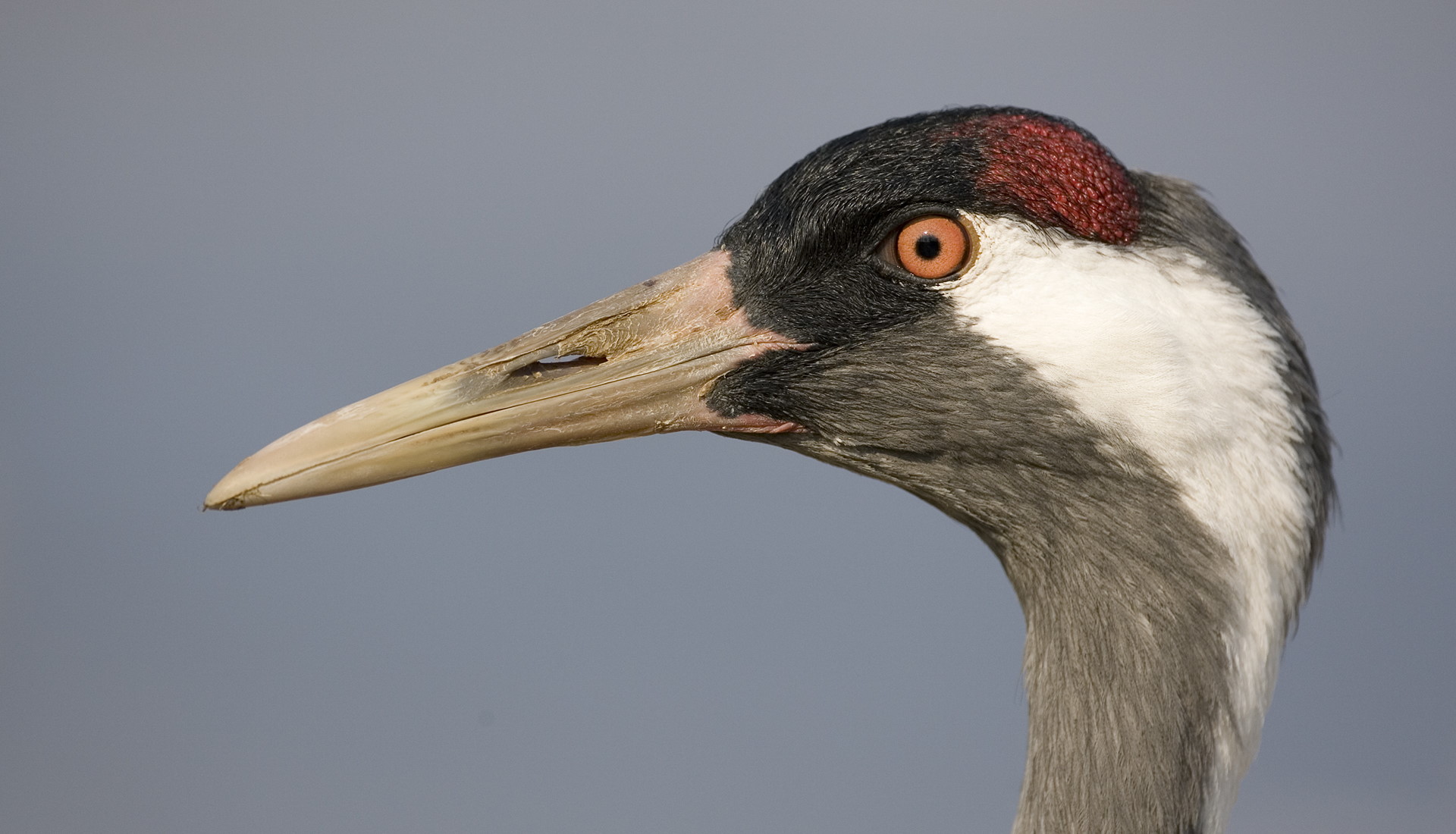
The Eurasian Crane is an iconic wetland bird, known for its evocative bugling call and mesmerising courtship dance.
Cranes were once widespread across the UK, but became extinct here in the late 1500s due to hunting and drainage of their wetland habitat. After a tentative return in the 1970s, population growth was slow for decades until a reintroduction project in south-west England boosted numbers. However, cranes in Scotland remained limited to a handful of breeding pairs.
In 2021, SCOTLAND: The Big Picture began exploring the potential to boost Scotland’s embryonic crane population through a conservation translocation, taking a similar approach to the Great Crane Project. Our project sought to establish a sustainable breeding population of cranes in Scotland, while encouraging the expansion of life-rich wetlands and creating opportunities for local communities. Crane reintroduction also had potential to normalise the return of missing species with a bird that would be highly visible, but less controversial than other reintroduction targets.
Unfortunately, a serious outbreak of avian influenza (‘bird flu’) in late 2022 delayed our initial plans, which were then further stalled by uncertainty around how Scotland's winter conditions would impact a reintroduced population's migratory behaviour. Meanwhile, there was good news emerging about the steady growth of a naturally recolonising population in the north-east of Scotland.
After further work in 2024 and 2025 considering different locations in Scotland for the project, we decided to stop pursuing a crane reintroduction. With Eurasian cranes from mainland Europe driving ongoing immigration to the UK, we felt that limited nature recovery resources and funding would be better spent on habitat restoration and other missing species that can’t return on their own.
Today, we’re passionate about the habitat restoration taking place across our Northwoods network and Loch Abar Mòr partnership, where land managers are already laying the foundations for cranes to recover and thrive naturally. By restoring and reconnecting wetlands at scale, and supporting land managers and communities to work with natural processes, we can remove barriers to recolonisation and allow cranes to expand into suitable areas of Scotland under their own steam. This approach also benefits biodiversity, climate resilience and people, ensuring that the return of this iconic species is part of a broader recovery of Scotland’s wetlands.